Hard-Rock Mining — Jaw + Impact Package
Mill-feed discharge held within 3 mm after retuning secondary impact apron settings and staging dual blow-bar kits at the regional hub.
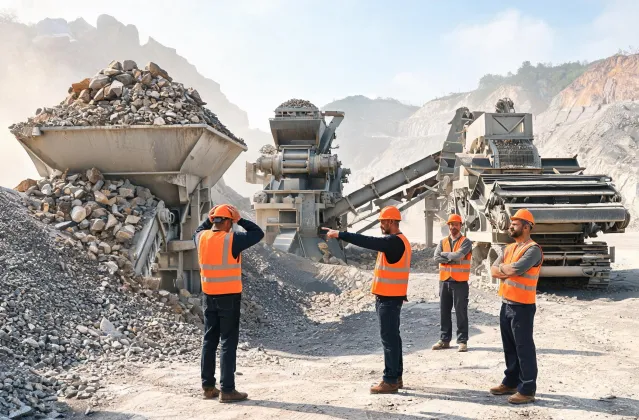
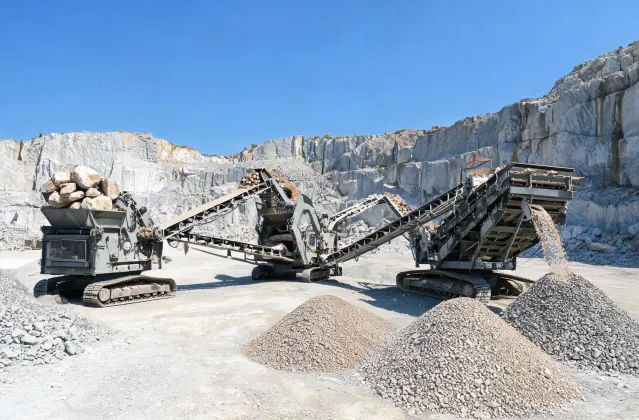
Problem-led configurations — not a generic product dump. Select your scenario and see which jaw, impact and screen combination fits before you request a quote. We talk feed size, discharge opening and output capacity (t/h), not carbon slogans.
Interactive guide for application engineers and buyers. Results are directional; final quotes confirm operating weight, chamber geometry and emissions documentation.
Outcomes emphasize throughput, discharge stability, liner windows and staging — not vague greenwashing claims. Packages stay honest about limits: an impact crusher will not replace a jaw on 800 mm blasted feed, and wet screens need slurry-pump duty defined before the PO.
Mill-feed discharge held within 3 mm after retuning secondary impact apron settings and staging dual blow-bar kits at the regional hub.
Tracked jaw/impact/screen string kept asphalt plants fed through a rainy season by matching truck body volume to sustained t/h, not nameplate peaks.
Urban recycling yard cut rebar carryover after magnet duty was sized to the impact chamber, protecting the tertiary screen media.
Canal borrow pit recovered fines with wet decks and sand wash modules; slurry-pump wet ends staged before the first flood-season surge.
Buyers debating primary crushing technology rarely need another brochure. They need both sides of the jaw-versus-impact selection, plus the limits that keep a package honest before the PO.
Structure stays simple, liner cost is predictable, and feed hardness tolerance is wide (Mohs ≤9). For blasted rock above roughly 600–800 mm, compressive crushing usually delivers more sustained t/h per kilowatt than an impact primary. Choose a jaw when feed size (mm), abrasive index and discharge opening range matter more than cubical product shape.
Product shape skews cubical and suits asphalt/concrete fractions when the secondary or tertiary stage must protect binder demand. Impact chambers struggle as true primaries on oversized hard feed; blow-bar life shortens fast on high-silica granite. Use impact when cubicity and downstream screen loading outweigh maximum feed size.
Share feed size, rock type, target fractions and whether the site needs Tier 4 Final documentation. Application engineers return machine classes, expected output capacity bands and liner staging options sized to your pit.